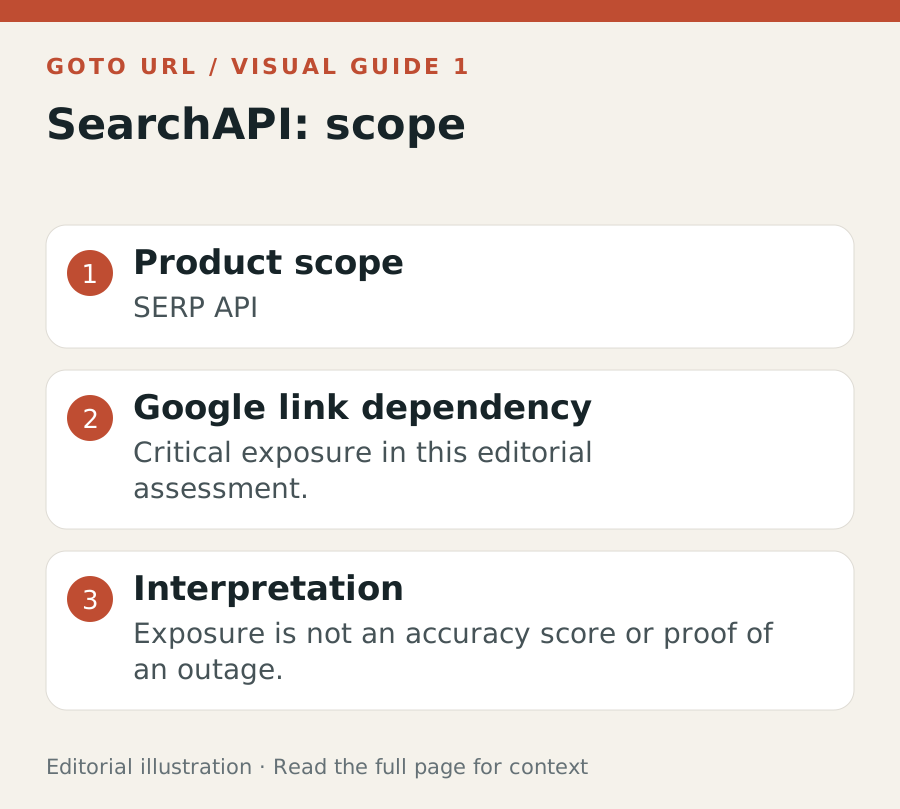
What SearchAPI provides
SearchAPI is a managed search-results API for developers and data teams. It handles browsers, proxies and parsing across Google and other search properties.
Its Google API returns organic and paid results, maps listings, featured snippets, knowledge graph data and related queries as structured records.
Where the redirect matters
The destination URL is a core output. If Google exposes an opaque /goto token rather than the publisher URL in result markup, the service must follow or otherwise resolve that intermediary before returning the link customers expect. At scale, an extra operation per result can increase latency, failure rates and collection cost even when the public API schema stays the same.
/goto?url=[hash]resolve + attributepublisher URL
What SearchAPI has said
Specific /goto responseSearchAPI’s current documentation says /goto affects references and links in AI Overviews, People Also Ask, sitelinks, perspectives, knowledge-graph profiles and video key moments. It documents both automatic recovery and an opt-in resolved-link mode.
SearchAPI says it first recovers destinations from other URL data Google still includes in the page and otherwise resolves the redirect over HTTP. Customers can request resolution of remaining wrappers with link=resolved; an unresolvable link is returned as the original Google URL.
This is unusually specific and technically plausible: it names surfaces, two resolution paths, latency and failure behaviour. The documentation is undated and no independent API benchmark was available, so coverage and reliability remain provider claims.
No /goto-specific surcharge or quota change was found. The documentation explicitly identifies extra latency when forced resolution is requested, but does not state the billing treatment of that added work.
What is known — and what is not
The source record above is the latest attributable evidence located for SearchAPI. Its stated outcome is not treated as an independent accuracy audit: the exposure rating still describes the relevant product’s dependence on resolving live Google result URLs.
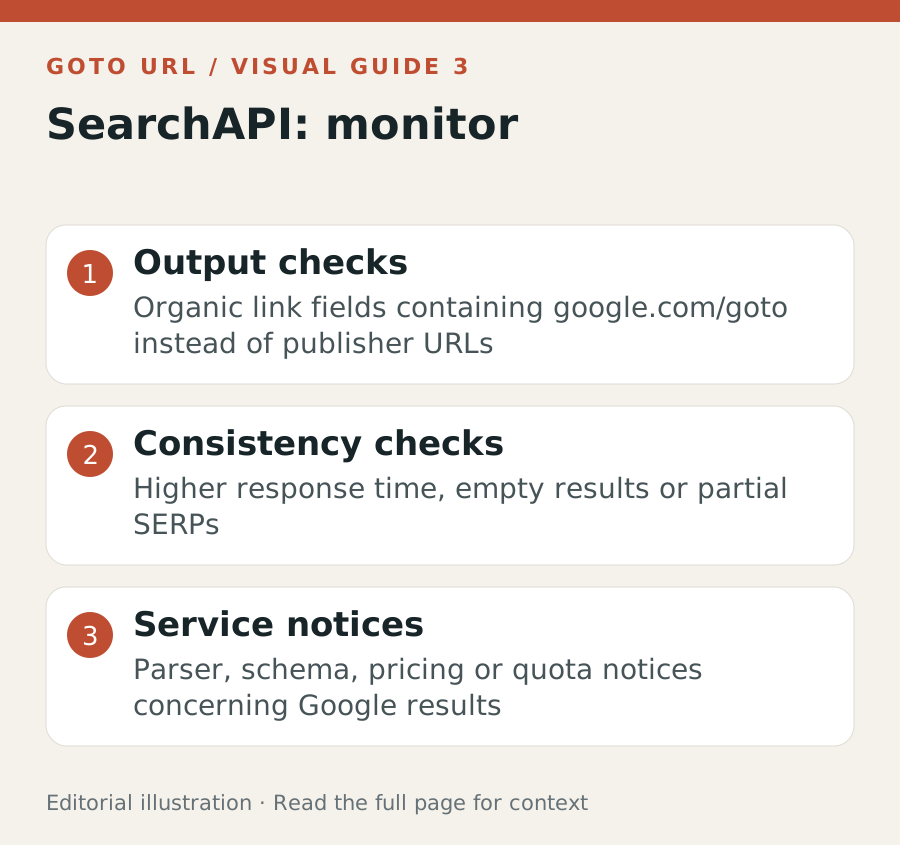
What customers should monitor
- Organic link fields containing google.com/goto instead of publisher URLs
- Higher response time, empty results or partial SERPs
- Parser, schema, pricing or quota notices concerning Google results
What should remain outside the change
- Non-Google sources where the redirect is not deployed
- Previously stored results that already contain resolved URLs