What SerpApi provides
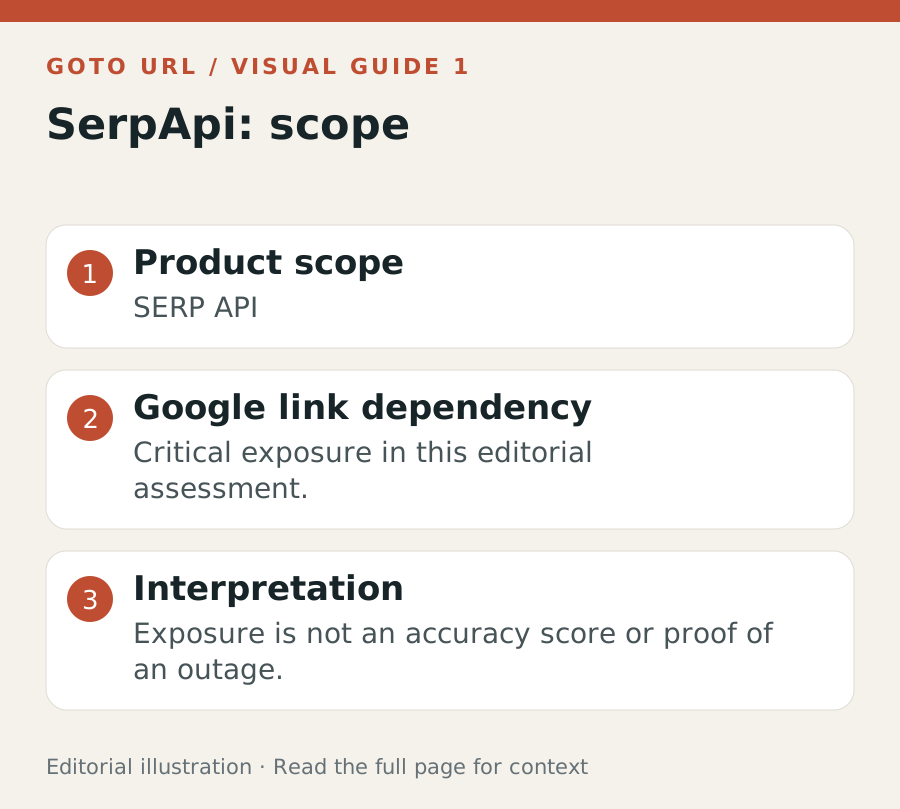
SerpApi is a specialist search-data company whose core product turns live Google and other search-engine results into structured API responses. It operates browser, proxy, CAPTCHA and parsing infrastructure for developers that do not want to maintain their own SERP collection stack.
Its Google Search API returns organic links, ads, maps, shopping results, knowledge panels and other SERP elements as JSON. Destination URLs are a fundamental part of the product consumed by SEO tools, AI systems and research applications.
Where the redirect matters
The destination URL is a core output. If Google exposes an opaque /goto token rather than the publisher URL in result markup, the service must follow or otherwise resolve that intermediary before returning the link customers expect. At scale, an extra operation per result can increase latency, failure rates and collection cost even when the public API schema stays the same. The exposure follows directly from the product design: customers expect final publisher links rather than opaque Google intermediary URLs.
/goto?url=[hash]resolve + attributepublisher URL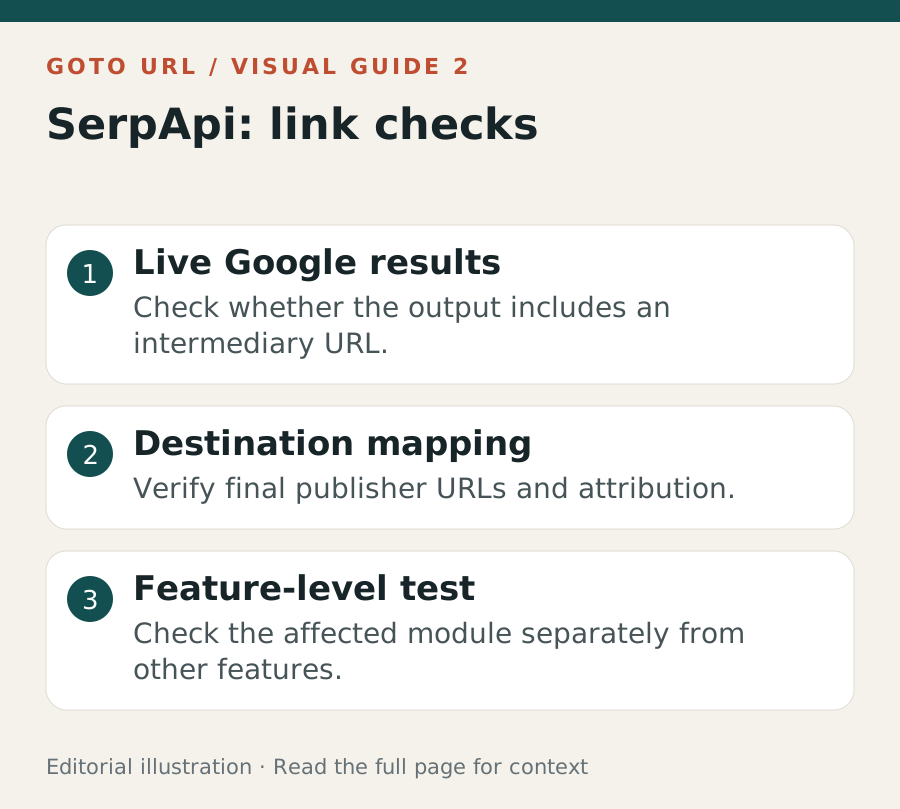
What SerpApi has said
Specific /goto responseSerpApi says the rollout briefly affected link fields in several Google-derived APIs while rankings, titles and snippets remained accurate. Its fix now returns direct destination URLs across the affected result types; a 7 September changelog is the latest formal update.
The provider says Google encoded different result types differently, so one parser was insufficient. It deployed separate handling across the affected fields; customers were not asked to change their integrations.
This is unusually specific and candid because it identifies an actual output defect, affected products and a later resolution. The outcome is still provider-reported: no public sample size, field-by-field success rate or independent comparison accompanied the resolved notice.
No /goto-specific price or quota change was announced. Keeping the response schema stable protects customers from integration cost, but SerpApi does not quantify the extra internal requests, latency or compute needed.
What is known — and what is not
The source record above is the latest attributable evidence located for SerpApi. Its stated outcome is not treated as an independent accuracy audit: the exposure rating still describes the relevant product’s dependence on resolving live Google result URLs.
What customers should monitor
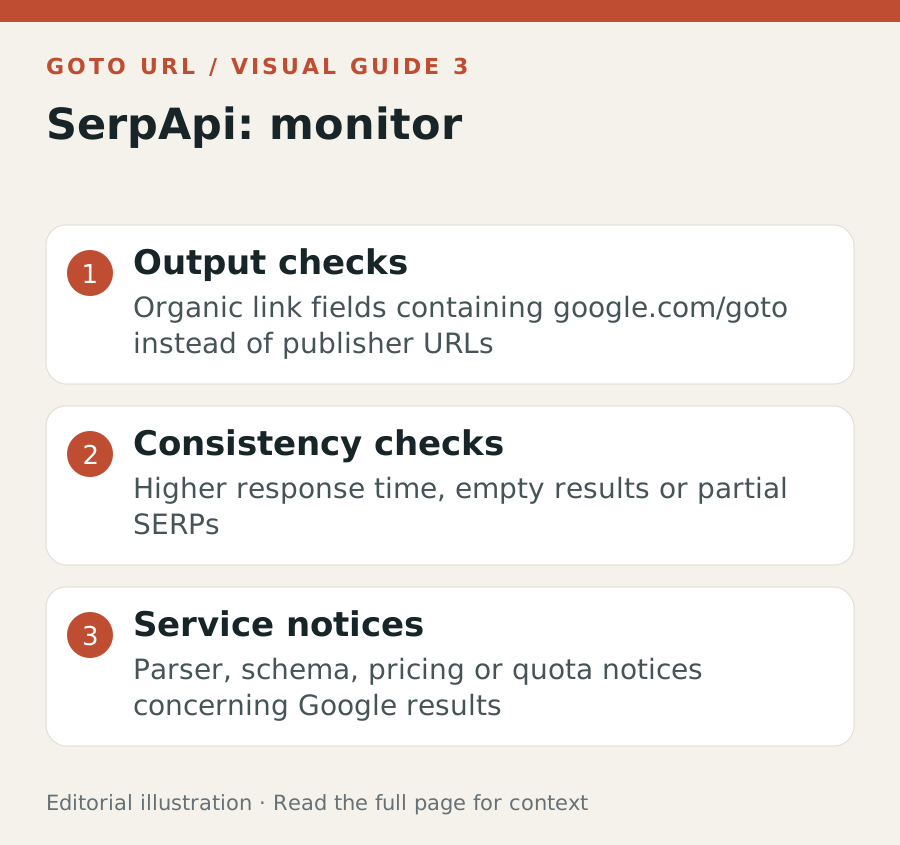
- Organic link fields containing google.com/goto instead of publisher URLs
- Higher response time, empty results or partial SERPs
- Parser, schema, pricing or quota notices concerning Google results
What should remain outside the change
- Non-Google sources where the redirect is not deployed
- Previously stored results that already contain resolved URLs