What STAT Search Analytics provides
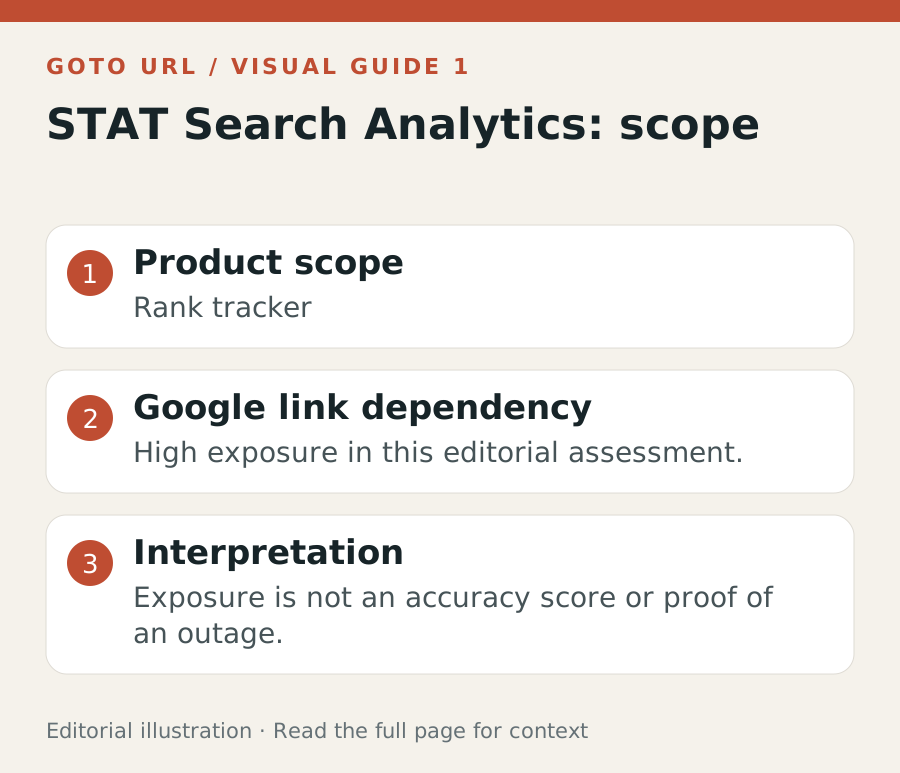
STAT is Moz’s enterprise SERP tracking product, designed for high-volume keyword portfolios and large SEO teams.
It collects daily location-specific rankings, result types, competitors and landing pages and supports large-scale analytics and exports.
Where the redirect matters
The Google collector must map every observed position to a domain and landing page. Opaque redirects can force a new resolution step, creating a risk of missing URLs, false volatility, slower refreshes or higher collection costs. Full-SERP and top-100 tracking multiply that work across every keyword and location. High-volume resolution is the exact workload stressed by the change: a small extra cost scales across the portfolio.
/goto?url=[hash]resolve + attributepublisher URL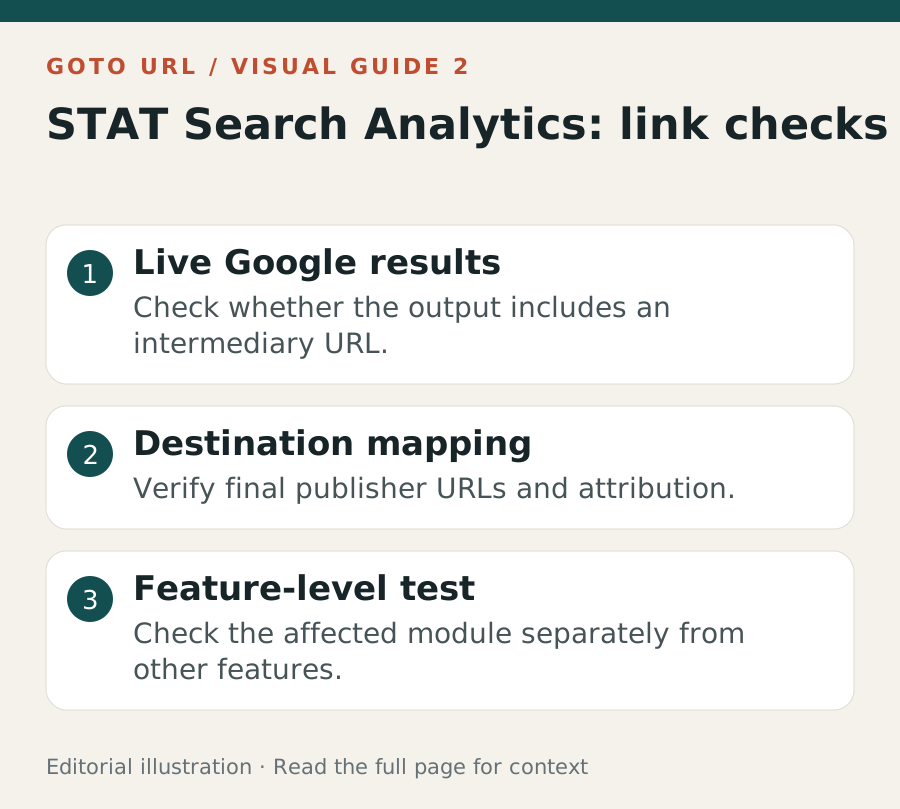
What STAT Search Analytics has said
Moz VP Jonathan Berthold publicly discussed Google masking result URLs and the wider rank-tracking impact. That establishes Moz-level awareness, but no STAT-specific claim of unaffected service, completed remediation or unchanged pricing was found.
No STAT implementation was disclosed. At STAT’s scale, either its collection layer or an upstream source must resolve destinations, and a small per-result overhead can become material across large keyword portfolios.
The speaker’s Moz role makes the discussion attributable, but it is not a STAT engineering post-mortem. No STAT-specific test set, output sample, availability metric or independent audit was published.
No /goto-specific STAT price, quota, result-depth or refresh-cadence announcement was found.
What is known — and what is not
The source record above is the latest attributable evidence located for STAT Search Analytics. Its stated outcome is not treated as an independent accuracy audit: the exposure rating still describes the relevant product’s dependence on resolving live Google result URLs.
What customers should monitor
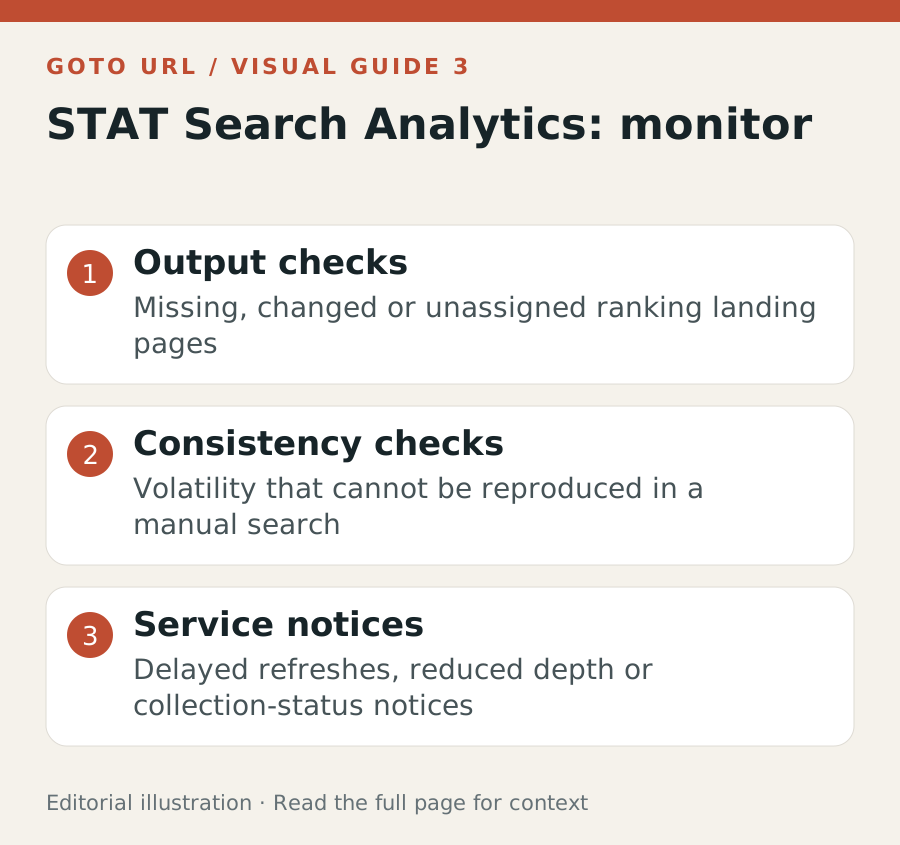
- Missing, changed or unassigned ranking landing pages
- Volatility that cannot be reproduced in a manual search
- Delayed refreshes, reduced depth or collection-status notices
What should remain outside the change
- Historical reports built from already resolved records
- Tracking on engines that do not use Google’s redirect
Read rank checks alongside Search Console
Match query, country, device and dates before comparing a tracker with GSC. Average position describes recorded impressions; it is not a fixed-location check. Review the reported page and clicks when a URL switches, and investigate whether the change is harmful before treating it as cannibalisation.
Use a fixed commercial watchlist alongside wider query discovery and lead outcomes. A missing check or incomplete SERP is not a measured ranking loss. Our SEO Stack review explains the measurements, and the Google analysis separates result-depth, access and URL-resolution failures.