What the October notices show
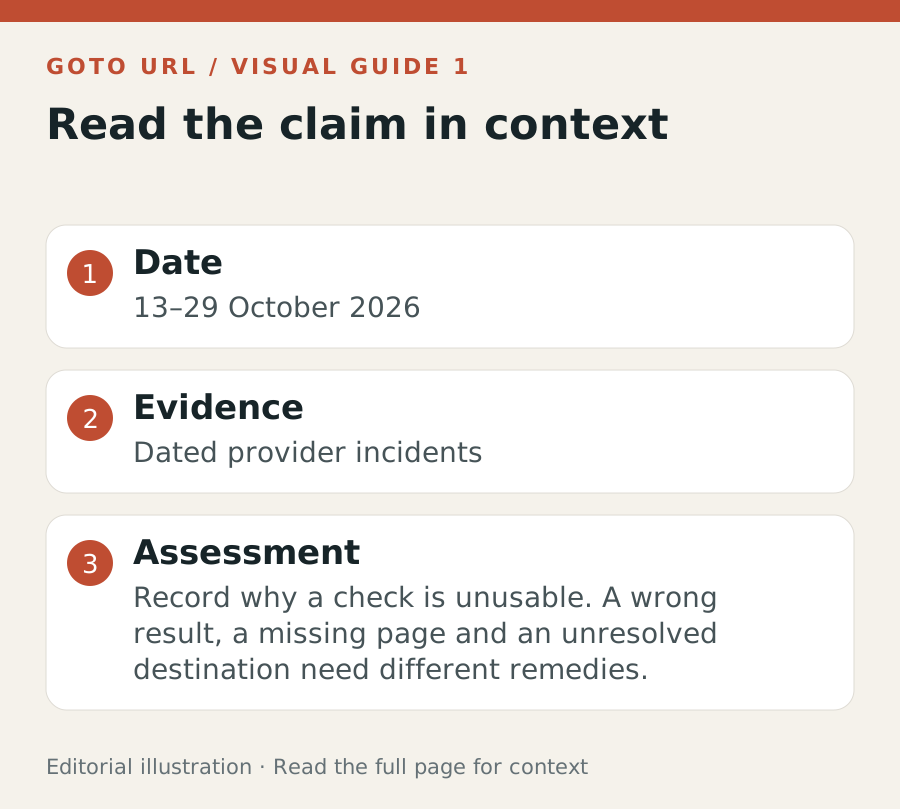
SerpApi posted an irrelevant/poisoned-results investigation on 13 October, an empty-pagination investigation on 21 October, and a 29 October update about valid queries returning no results or timing out. These notices establish problems in that provider’s service; they are not an inventory of every Google change.
Evidence: SerpApi: irrelevant/poisoned results incident ↗ · SerpApi: empty paginated results incident ↗ · SerpApi public status record ↗
The alternative to publishing an unchecked refresh
Johannes Beus describes SISTRIX checking divergent results and retrying until a verified result is available, which can leave some keywords with older update dates. That is a stated quality-versus-freshness trade-off, rather than proof that every supplier follows the same approach.
Evidence: Johannes Beus: why Google ranking data collection is changing ↗
Our viewpoint: define what ‘working’ means
An API can return a syntactically valid response that is unsuitable for the customer's decision. Availability, result authenticity, depth, freshness and URL resolution should be inspected separately. A single uptime percentage cannot express all five.
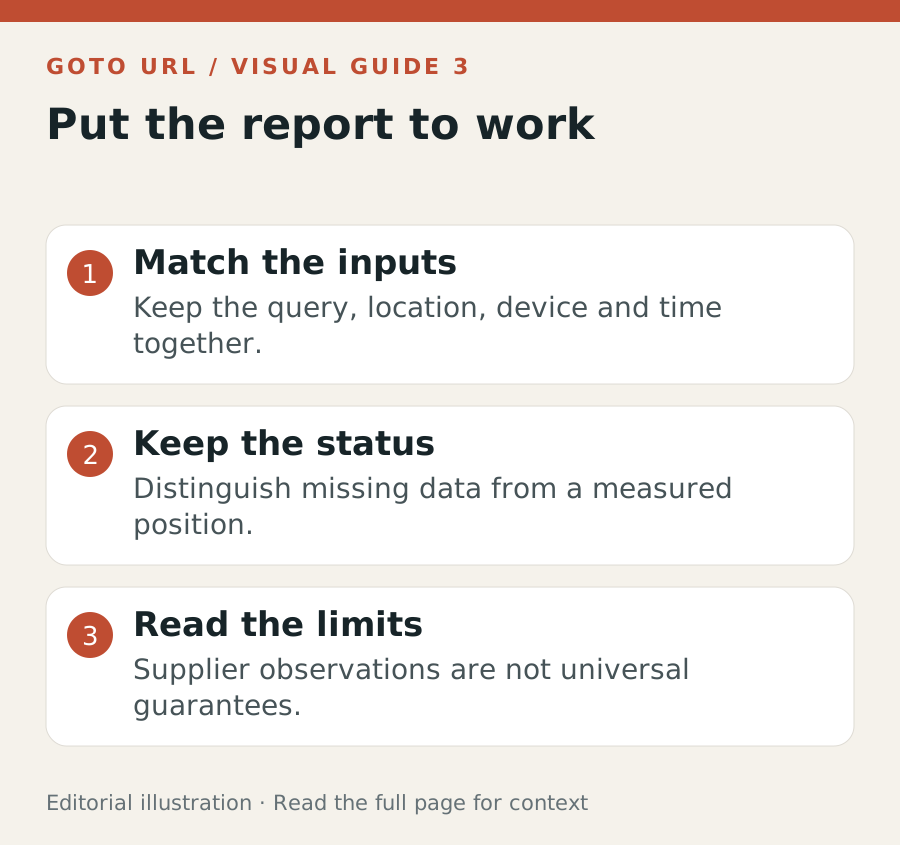
For historical reporting, preserve both when a check was scheduled and when usable data was obtained. Do not silently replace missing checks with zero rankings. Where a platform carries forward older values, the report should make that age visible.
What this means when comparing tools
Check a fixed sample through the actual module you buy. A current homepage statement may not describe pagination, AI citations or competitor exports. Ask the provider for its incident dates, affected surfaces and rules for suppressing questionable output.
We do not infer a permanent supplier ranking from these notices. A disclosed outage is evidence of a problem and also evidence of transparency. A vendor without a public notice has not thereby demonstrated an unaffected service.
Sources and verification
Checked 31 October 2026. We reviewed the public material linked below. We have not independently benchmarked the providers or tested live Google tokens for this article. A mutable status page may change after this check.
- SerpApi: irrelevant/poisoned results incident ↗
13 October investigation and subsequent updates.
- SerpApi: empty paginated results incident ↗
21 October investigation; subsequent updates retained.
- SerpApi public status record ↗
Read 31 October; includes a 29 October update on valid queries returning no results.
- Johannes Beus: why Google ranking data collection is changing ↗
SISTRIX’s account, published 7 October 2026.